Walking into a kitchen store can be overwhelming. There are gadgets for almost every task, but many cooks rely on a surprisingly small set of tools for most meals. Starting with versatile essentials and adding specialty tools as you need them saves money, space and clutter.
This guide shares a practical starter list of kitchen tools, along with tips for choosing each one. It focuses on function rather than specific brands, since the right choice depends on your cooking style and budget.
How to Think About Kitchen Tools
Before buying:
- Start with what you cook most often
- Choose versatile tools that handle multiple tasks
- Buy quality for frequently used items
- Add specialty tools later if you find a real need
Knives
Chef’s Knife
A good chef’s knife handles most cutting tasks: chopping vegetables, slicing meat and mincing herbs. An 8-inch knife is a common starting size, though some people prefer shorter or longer blades. See chef’s knives under $100.
Paring Knife
A small paring knife handles peeling, trimming and detailed work.
Serrated Bread Knife
A serrated knife slices bread, tomatoes and delicate foods without crushing them.
Sharpening Tools
A honing rod and a sharpener or whetstone keep knives working well. See how to sharpen a kitchen knife.
Cutting Boards
Have at least one large cutting board for everyday prep. Many cooks keep separate boards for raw meat and produce to reduce cross-contamination, which the USDA recommends. See cutting board guide.
Cookware
Skillets
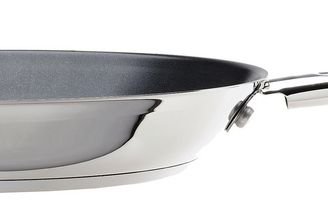
- Nonstick skillet for eggs and delicate foods. See best nonstick pans.
- Stainless steel or cast iron skillet for searing and browning. See stainless steel pan care and cast iron skillet care.
Saucepan
A medium saucepan with a lid handles grains, sauces and reheating.
Stockpot or Dutch Oven
A large pot handles pasta, soups and stews. A Dutch oven also braises and bakes. See Dutch oven buying guide.
Sheet Pans
Rimmed sheet pans roast vegetables, bake cookies and make sheet pan dinners.
Measuring Tools
- Measuring cups for dry ingredients
- Liquid measuring cup with a spout
- Measuring spoons
- Kitchen scale for accurate baking and portioning
A kitchen scale is often recommended for baking because weights are more consistent than volume measurements.
Utensils
- Wooden spoons for stirring
- Silicone spatula for scraping bowls and nonstick pans
- Fish spatula or turner for flipping
- Tongs for turning, serving and grabbing
- Ladle for soups
- Whisk for sauces, eggs and batters
- Slotted spoon
Mixing and Prep
- Mixing bowls in several sizes
- Colander for draining pasta and rinsing produce
- Fine-mesh strainer for sifting and straining
- Vegetable peeler
- Box grater or microplane
- Can opener
Food Safety Tools
Instant-Read Thermometer
A thermometer is one of the most useful kitchen tools. The USDA recommends using a food thermometer to check that meat, poultry, seafood and egg dishes reach safe minimum internal temperatures. See kitchen thermometer guide.
Storage Containers
Airtight containers keep leftovers fresh. Label and date leftovers.
Baking Basics
- Baking dish
- Loaf pan
- Muffin tin
- Cooling rack
- Parchment paper
Small Appliances
Small appliances are optional but can be useful:
- Blender or immersion blender
- Toaster or toaster oven
- Air fryer. See air fryer vs. convection oven.
- Pressure cooker or slow cooker. See Instant Pot vs. slow cooker.
Choose based on what you cook and how much counter space you have.
Nice-to-Have Extras
- Kitchen shears
- Salad spinner
- Mandoline (use with a cut-resistant glove or guard)
- Mortar and pestle
- Citrus juicer
- Rolling pin
What to Skip at First
Single-purpose gadgets often end up unused. Before buying, consider whether a tool you already own can handle the task.
Building a Kitchen on a Budget
- Buy essentials first
- Shop restaurant supply stores for durable basics
- Consider secondhand cookware, especially cast iron
- Buy individual pieces rather than large sets with items you will not use
Caring for Tools
- Hand wash knives and wooden tools
- Dry tools thoroughly
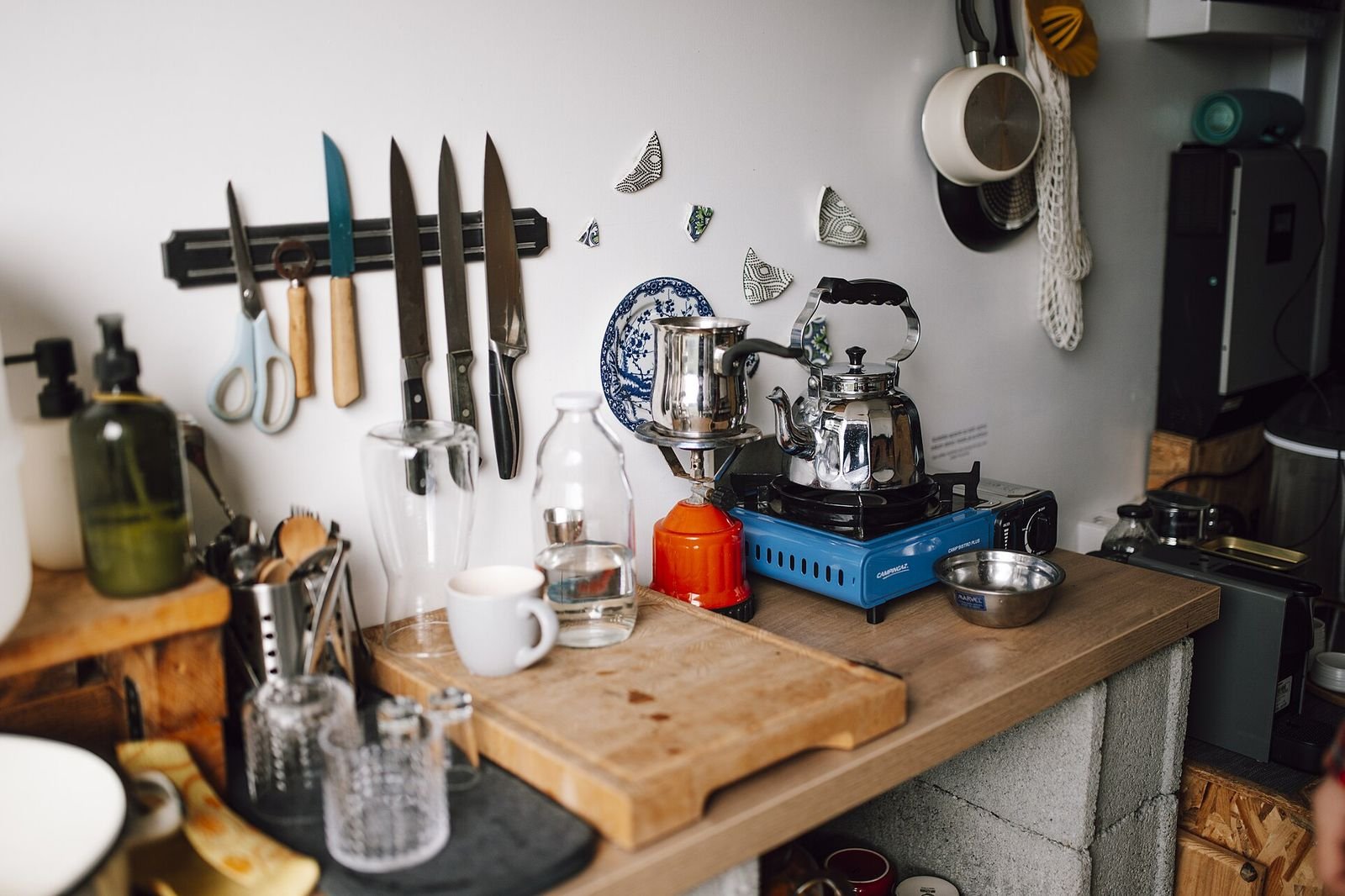
- Store knives safely in blocks, magnetic strips or sheaths
- Replace worn tools
Questions to Ask Before Buying
- What do you cook most often?
- Do you already own a tool that does this?
- How much storage space do you have?
- Is quality important for this item?
Building Your Kit in Stages
You do not need to buy everything at once. A practical order:
- Start with essentials you will use daily: a chef’s knife, a cutting board, a skillet, a saucepan, a spatula, tongs and measuring tools.
- Add tools that solve frustrations: if you struggle to tell when meat is done, add a thermometer; if your rice boils over, add a larger pot.
- Upgrade worn items: replace warped boards, dull peelers and melted spatulas as they wear out.
- Add specialty tools last: buy a mandoline, stand mixer or pasta maker only when you know you will use it.
Organizing Your Tools
- Keep daily tools near the stove in a crock or drawer.
- Store knives safely in a block, magnetic strip or with edge guards.
- Group baking tools together so they are easy to find.
- Declutter once a year. Donate duplicates and tools you have not used.
A smaller, well-chosen set of tools often makes cooking easier than a drawer packed with gadgets.
Questions to Ask Before Buying a Tool
- Will I use this at least once a week?
- Does another tool I own already do this job?
- Is it easy to clean?
- Where will I store it?
Tools Worth Spending More On
Some tools reward a bigger budget because you use them constantly: a chef’s knife, a heavy skillet and a reliable thermometer. Others, like measuring cups, colanders and wooden spoons, work well at low prices. Spend where quality affects daily cooking.
Frequently Asked Questions
What is the most important kitchen tool?
Many cooks say a good chef’s knife.
Do I need a knife set?
Not necessarily. A chef’s knife, paring knife and bread knife cover most tasks.
Should I buy a cookware set?
Sets can be convenient, but individual pieces may better fit your needs.
Is a kitchen scale necessary?
It is especially useful for baking.
Why do I need a thermometer?
To confirm foods reach safe internal temperatures.
The Bottom Line
Start with a chef’s knife, cutting boards, a few versatile pans, measuring tools, basic utensils and a thermometer. Add specialty tools as you discover real needs, buy quality for frequently used items and care for your tools so they last.
Editorial note: Whisk Den is independent and reader-supported. This guide is based on research into manufacturer documentation, published specifications and widely accepted best practices; we have not been paid to mention any product. If we add affiliate links in the future, they will be clearly disclosed per our Affiliate Disclosure.
Photo: Kitchen scene with cooking tools and equipment by Shixart1985, CC BY 2.0