A chef’s knife is the workhorse of most kitchens. You do not need to spend hundreds of dollars to get a knife that cuts well and feels good in your hand. Many well-regarded chef’s knives are available for under $100, but they differ in style, steel, weight and maintenance needs.
This guide explains what to look for so you can choose a knife that fits your cooking. It focuses on features rather than rankings, since prices and product lines change. Check current listings and return policies.
German vs. Japanese Styles
German-Style Knives
German-style chef’s knives are typically:
- Heavier with thicker blades
- Made from softer steel that is tougher and less prone to chipping
- Curved along the edge, suited to a rocking cutting motion
- Sharpened at a wider angle
They are often forgiving and durable. Brands associated with this style include Wüsthof, Zwilling J.A. Henckels and Victorinox (Swiss, but similar in approach).
Japanese-Style Knives
Japanese-style chef’s knives, often called gyuto, are typically:
- Lighter with thinner blades
- Made from harder steel that holds a sharp edge longer but can chip
- Flatter toward the heel, suited to push and pull cuts
- Sharpened at a narrower angle
Brands include Mac, Tojiro, Global, Shun and others, with some models under $100.
Santoku Knives
A santoku is a Japanese-style knife with a shorter, flatter blade, often with a rounded tip. Many home cooks like it for vegetables.
Hybrid Styles
Many knives blend features. Hold or research the specific knife.
Steel Types
Stainless Steel
Most knives under $100 are stainless steel, which resists rust and staining with reasonable care.
High-Carbon Stainless
Many manufacturers use “high-carbon stainless” to describe steel that balances edge retention and corrosion resistance.
Carbon Steel
Carbon steel knives can get very sharp and are easier to sharpen, but they rust and discolor without careful drying. They develop a patina over time.
Hardness
Steel hardness is often measured on the Rockwell scale (HRC). Harder steel generally holds an edge longer but can be more brittle. Softer steel is tougher but needs honing more often.
Blade Length
- 6-inch: Compact and nimble, good for small hands or kitchens
- 8-inch: Common all-purpose size
- 10-inch: Better for large tasks but less maneuverable
Many people start with 8 inches.
Handle and Grip
- Western handles are often heavier and contoured
- Japanese wa handles are lighter and often octagonal or D-shaped
- Materials include wood, synthetic composite, stainless steel and textured plastic
The best handle is one that feels secure and comfortable for your grip.
Balance and Weight
Some people prefer heavier knives that power through food, while others prefer lighter knives that feel nimble. Balance point affects how a knife feels. If possible, hold knives before buying.
Full Tang vs. Partial Tang
Full tang knives have steel extending through the handle and are often seen as sturdy. Many well-made knives use other constructions, so tang alone does not determine quality.
Stamped vs. Forged
- Forged knives are shaped from a single piece of heated steel and often have a bolster
- Stamped knives are cut from sheet steel and are often lighter and less expensive
Both can perform well. Some well-regarded budget knives are stamped.
Bolster
A bolster is the thick section between the blade and handle. Full bolsters can make sharpening the heel harder. Many modern knives use partial bolsters.
Edge Retention and Sharpening
All knives dull with use. Harder steel holds an edge longer but may be harder to sharpen. Plan for regular honing and periodic sharpening. See how to sharpen a kitchen knife.
Care Tips
- Hand wash and dry immediately. Dishwashers can damage edges and handles.
- Use appropriate cutting boards. Wood and plastic are gentler than glass or stone. See cutting board guide.
- Store safely in a block, magnetic strip or blade guard.
- Avoid twisting or prying with the blade.
- Do not cut frozen foods or bones with thin blades.
Knives Commonly Considered Under $100
Knives often mentioned by home cooks in this range include models from Victorinox, Mercer, Tojiro, Mac, Wüsthof, Zwilling, Misen and others. Compare current prices, as some models move above or below $100.
Questions to Ask Before Buying
- Do you prefer a rocking or push-pull cutting motion?
- Do you want a heavier or lighter knife?
- Are you willing to maintain carbon steel?
- What blade length suits your kitchen?
- How will you sharpen it?
- What is the return policy?
How to Hold a Chef’s Knife
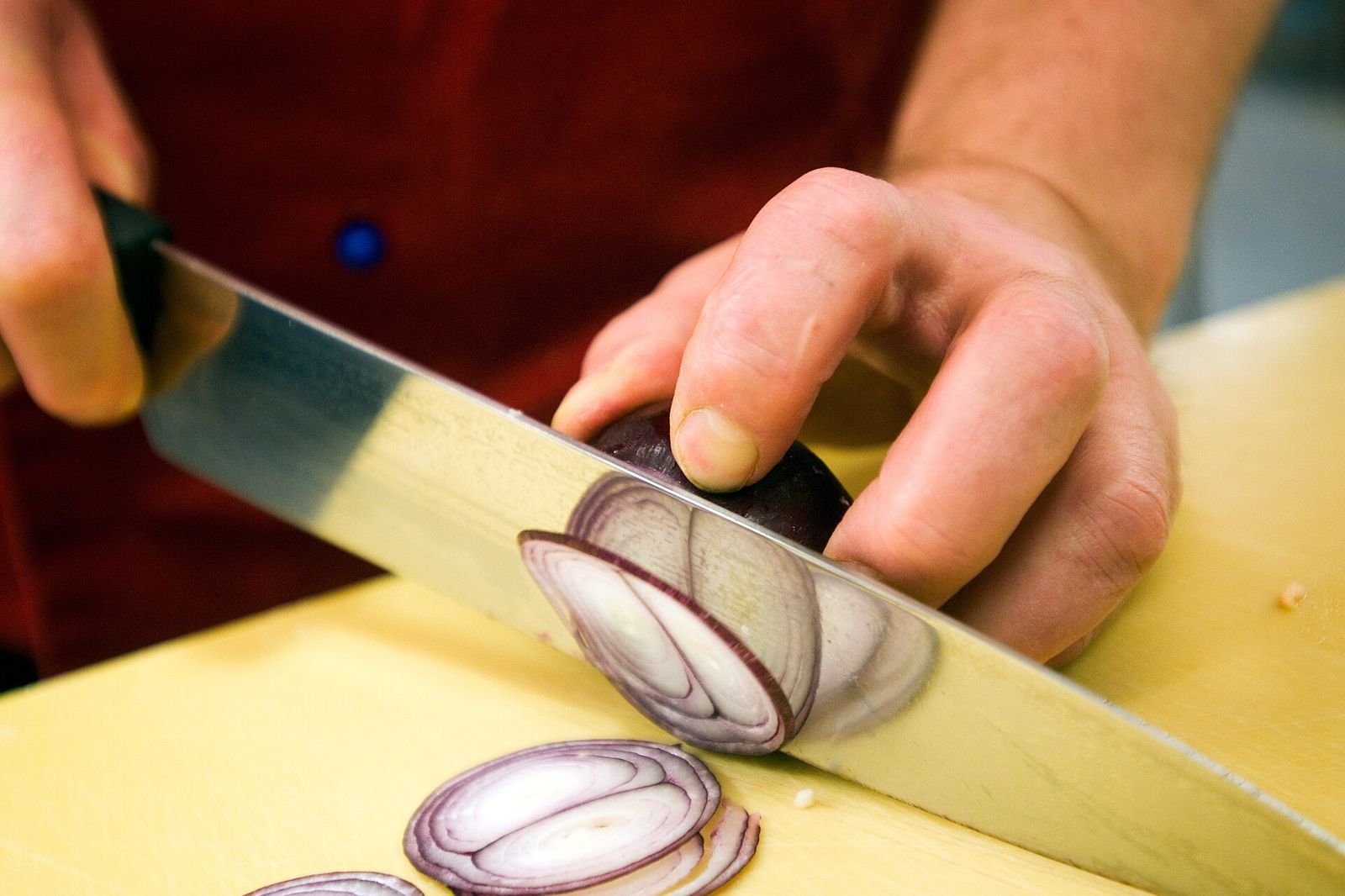
A secure grip improves control. Many cooks use a pinch grip: pinch the blade just ahead of the handle between your thumb and the side of your index finger, then wrap the remaining fingers around the handle. Your guiding hand should form a claw, with fingertips tucked and knuckles guiding the side of the blade.
Basic Cuts to Practice
- Rocking chop: Keep the tip on the board and rock the blade through herbs and vegetables.
- Push cut: Slide the blade forward and down through firm vegetables.
- Slicing: Use long, smooth strokes for meat and fish.
- Dicing an onion: Halve it, make horizontal and vertical cuts, then slice across.
Practice slowly. Speed comes with consistency.
Caring for a Budget Knife
An inexpensive knife can perform well for years with care:
- Hand wash and dry it right away.
- Hone it regularly and sharpen when needed. See how to sharpen a kitchen knife.
- Use a wood or plastic cutting board. See the cutting board guide.
- Store it so the edge does not knock against other utensils.
Trying Before You Buy
If possible, hold a knife in a store before buying. Notice whether the handle fits your hand, whether the weight feels balanced and whether your knuckles clear the board when you cut.
Frequently Asked Questions
Is a $100 knife good enough?
Many cooks find knives under $100 very capable with proper care.
German or Japanese: which is better?
Neither is better for everyone. German knives are tougher, while Japanese knives are often lighter and sharper.
How often should I sharpen my knife?
It depends on use. Hone regularly and sharpen when honing no longer restores the edge.
Can I put my knife in the dishwasher?
Most manufacturers recommend hand washing.
What size chef’s knife should I buy?
An 8-inch knife is a common starting point.
The Bottom Line
A chef’s knife under $100 can serve you well for years. Decide between German and Japanese styles, choose a comfortable length and handle, understand steel trade-offs and commit to honing, sharpening and careful hand washing.
Editorial note: Whisk Den is independent and reader-supported. This guide is based on research into manufacturer documentation, published specifications and widely accepted best practices; we have not been paid to mention any product. If we add affiliate links in the future, they will be clearly disclosed per our Affiliate Disclosure.
Photo: Matlagning (2) by Johannes Jansson, CC BY 2.5 dk